- TECHSWU
- Posts
- TechSwu
TechSwu

TECHSWU
March 03, 2026


In "Architecture's Awkward Embrace of Artificial Intelligence," Martin C. Pedersen explores the conflicting emotions architects face as they navigate the rise of AI.
With the promise of efficiency and innovation comes anxiety about losing creative control. The article highlights a divide within the profession: while only a fraction of architects actively use AI tools, many are experimenting cautiously amidst a culture of skepticism.
Experts like Randy Deutsch and Phil Bernstein stress that while AI can’t currently handle the nuanced decision-making inherent in architecture, advancements are rapid, raising questions about the future role of human designers. Firms like Cove Architecture are venturing into "AI-powered but human-centered" approaches, aiming to optimize processes without sacrificing the artistry of architecture.
Ultimately, as AI’s capabilities continue to evolve, architects must confront a shifting landscape that may redefine their profession—potentially benefiting design while challenging traditional business models.
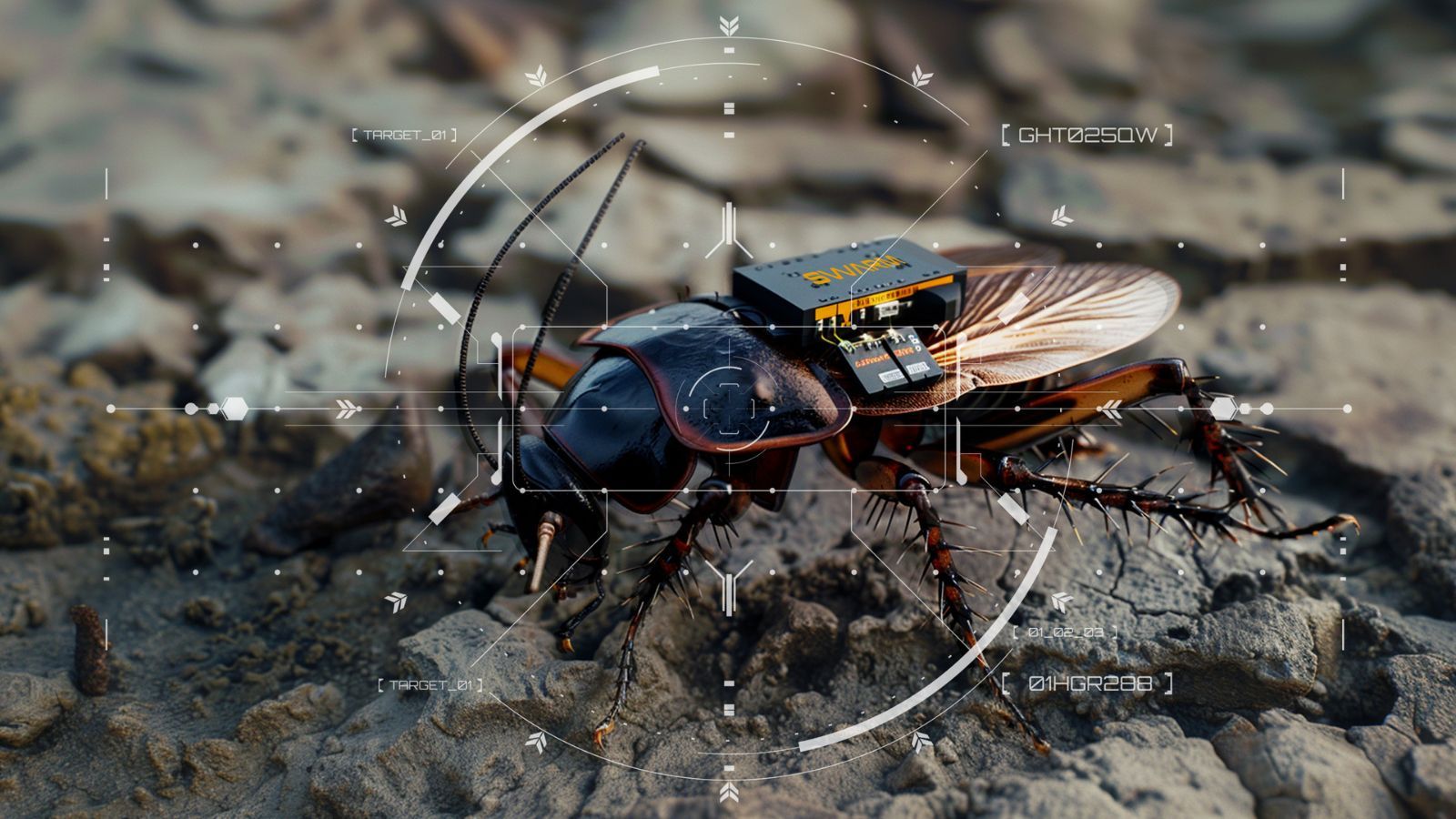
In an exciting leap forward in military technology, German startup SWARM Robotics has developed a bioelectronic cockroach designed for reconnaissance missions. These astonishing cyborg insects, equipped with AI-powered sensor backpacks, can navigate complex and high-risk environments that are otherwise inaccessible to humans and drones.
Imagine a tiny cockroach carrying cameras and microphones as it crawls through rubble and tunnels, relaying critical live intelligence back to troops. According to SWARM’s CEO, Stefan Wilhelm, this innovation marks a departure from traditional drones, focusing instead on creating living systems with inherent intelligence.
With NATO forces already testing these insect platforms, the future of warfare may well rely on swarms of bio-robots rather than conventional machinery. As SWARM continues to push boundaries, they hint at a decade where access and resilience could redefine geopolitical power.

In Part 4 of Local Spins' series on the "AI Revolution in Music," industry veterans from West Michigan discuss the irreplaceable human element in music creation and performance. Despite the rise of AI tools that democratize music production, experts like Joel Ferguson, Josh Kaufman, and Austin Ruhstorfer emphasize that genuine creativity and the collaborative spirit of musicians can't be replicated by algorithms.
AI may offer new conveniences, but it lacks the profound emotional and experiential connection that artists forge with their audiences. While these professionals view AI as a valuable tool rather than a threat, they express concern about its potential to dilute the artistry of music.
Ultimately, they encourage musicians to focus on building authentic fan bases and crafting heartfelt music, reminding us that the spark of inspiration and the shared human experience remain at the heart of true artistic expression.

AI technology is revolutionizing cybercrime, making it more accessible and efficient for hackers. This "vibe hacking" phenomenon is lowering the barriers for cybercriminals, as seen in a recent incident where a hacker exploited a jailbreak version of Anthropic's chatbot to breach Mexican government networks, stealing sensitive taxpayer data.
The use of AI has transformed hacking into an “assembly line” process, enabling less skilled individuals to launch sophisticated attacks. Amazon's security team revealed that over 600 firewall systems in various countries were compromised using commercially available AI tools, showcasing the rapid advancement in hacking methods.
With a sharp rise in ransomware groups and public software exploitation, experts warn that AI is speeding up attacks, making it harder for businesses to defend against vulnerabilities. As hackers gain access to powerful AI models, the cybersecurity landscape is shifting dramatically, and the potential for automated, undetectable cybercrime looms large.

The Mobile World Congress (MWC) 2026 in Barcelona is buzzing with groundbreaking tech innovations! Pocket-lint highlights five of the coolest gadgets showcased this year, from Motorola’s sleek Moto RAZR Fold—featuring vibrant colorways and a long-lasting 6,000mAh battery—to Honor’s impressive MagicPad 4, a high-end tablet that rivals the iPad Pro's design. Lenovo brings the future to gaming with its concept Legion Go Fold, a versatile handheld console with a foldable screen that doubles as a tablet.
Xiaomi's Vision Gran Turismo wowed attendees with its avant-garde design and innovative features designed for speed and efficiency. Lastly, the chic Nothing Phone (4a) debuts with a colorful twist on its unique Glyph Interface.

YouTube is shaking up the creative scene with its new AI remix features, "Add Object" and "Reimagine," designed specifically for Shorts. Aiming to simplify video creation, these tools allow creators to spin new content from existing clips effortlessly.
With "Add Object," users can drop AI-generated elements into short videos using simple prompts, while "Reimagine" takes it up a notch by transforming a still frame into an entirely new AI-generated video. Currently in testing, these features aim to streamline content creation, giving creators the power to ride trends with ease.
Plus, YouTube emphasizes transparency, ensuring that original creators receive credit for their work and can opt out of these remixes if desired. As YouTube dives deeper into generative AI, it raises intriguing questions about content ownership and creator consent in the evolving digital landscape.

Anthropic's recent clash with the Pentagon has revealed the hidden risks posed by AI vendors within enterprise supply chains. After refusing a request to modify its intelligence systems, Anthropic was sanctioned, drawing parallels to measures typically reserved for firms with ties to adversaries.
This situation underscores the complexities of managing AI tools, which are often informally integrated into workflows—unlike traditional hardware.
The repercussions of this designation could ripple throughout organizations, prompting compliance teams to meticulously trace the AI's influence across departments.
With AI embedded deeply in business processes, identifying and removing it can prove to be a daunting task, akin to unwinding an invisible web of dependencies. As businesses increasingly rely on AI solutions, the implications of Anthropic’s predicament extend far beyond its $200 million contract, challenging the very nature of supply chain management in the digital age.