- TECHSWU
- Posts
- TechSwu
TechSwu
AI shifts your behavior, iPhone 18 leaks, Cook's exit, killer robots & the skill hiring managers now crave

TECHSWU
September 01, 2026


This Tiny Magnetic Robot Drills Through Brain Tissue Like a Boss
Picture a robot so small it could get lost in a teaspoon, yet powerful enough to tunnel through brain tissue with pinpoint precision. That's exactly what researchers have demonstrated in a striking new lab experiment: a tiny magnetic robot successfully drilled through sheep brain tissue, hinting at a future where reaching deep, stubborn brain lesions might not require the invasive surgery we rely on today. Here's the gist. Some brain lesions sit in locations that are notoriously tricky for surgeons to access without damaging healthy tissue along the way. Traditional approaches often mean navigating narrow corridors with rigid tools, which carries real risk. This magnetic microrobot offers a different approach entirely, using external magnetic fields to steer it through soft tissue with far more control and flexibility than conventional instruments allow. In the test, the robot bored its way through sheep brain tissue, a common and reliable stand-in for human brain tissue in early-stage research. While this is very much a laboratory milestone rather than a hospital-ready tool, it's a meaningful proof of concept. It shows that tiny, remotely guided robots could one day help doctors reach lesions that are currently considered too risky or too deep to treat safely. Of course, there's a long road ahead, including further testing, safety validation, and eventually human trials, before anything like this reaches an operating room. But this experiment adds to a growing body of evidence that microrobotics could reshape neurosurgery, making delicate procedures safer, more precise, and less invasive for patients down the line.

Killer Robots Are Here—Why Isn't Anyone Stopping Them
Here's another wake-up call that deserves our attention: top voices at the UN and the Red Cross are once again sounding the alarm about a threat we can't afford to ignore. UN Secretary-General António Guterres, alongside the head of the International Committee of the Red Cross and Red Crescent, has issued a stark warning about where certain technologies might be taking us, and honestly, it's the kind of message that should make us all pause and think. This isn't the first time we've heard these concerns, and that's exactly the point. When respected international leaders keep raising the same red flags, it's worth asking why the conversation hasn't shifted from warning to action. The pattern here feels familiar. We innovate rapidly, often outpacing our ability to consider consequences, and then find ourselves scrambling to address risks that were foreseeable all along. What makes this particular warning notable is who's delivering it. These aren't fringe voices or alarmists. These are people whose entire mandate involves protecting human welfare on a global scale, and when they speak up together, it signals genuine concern rather than routine caution. For those of us following tech developments, this serves as an important reminder that innovation doesn't happen in a vacuum. The tools we build carry real-world implications, and international bodies are increasingly stepping in to highlight what those implications might mean for humanity's future. The message is clear: progress without reflection is a gamble, and it's time we started taking these warnings more seriously.


Tim Cook Exits as Apple CEO After 15 Years That Changed Everything
Today marks the end of an era in Cupertino. Tim Cook is wrapping up his final day as Apple's chief executive, closing out a remarkable 15-year run that reshaped the company in ways few could have predicted back in 2011. When Cook first stepped into the role, he was taking over from Steve Jobs, a nearly impossible act to follow, and Apple was still very much defined by the iPhone and Jobs' larger-than-life legacy. Fast forward to today, and Cook leaves behind a vastly different company, one that has grown into one of the most valuable technology businesses on the planet. Under his leadership, Apple diversified far beyond the iPhone, building out services, wearables, and a broader ecosystem that kept customers locked in and revenue streams multiplying. Cook proved himself not as a flashy visionary in the Jobs mold, but as an operational mastermind who scaled Apple's supply chain, expanded its global footprint, and steered the company through everything from trade tensions to a pandemic. His tenure wasn't without criticism, of course. Some argued Apple's innovation slowed under his watch, leaning more on refinement than reinvention. But the numbers speak for themselves, with Apple's market value soaring to heights that once seemed unimaginable. As Cook steps away, the tech world watches closely to see who inherits the reins and how they'll carry forward, or reinvent, the Apple playbook he leaves behind.

iPhone 18 Pro Leaks Are Here: 10 Upgrades to Get Hyped About
Mark your calendars, tech fans—Apple's iPhone 18 Pro series is rumored to make its grand debut on September 9, and the whispers floating around suggest this could be one seriously exciting upgrade cycle. If the leaks hold up, Apple is gearing up to push the Pro lineup further than ever, touching nearly every major aspect of the device that power users care about most. First up, the chip. Word on the street points to a next-gen processor that promises faster performance and improved efficiency, which could mean smoother multitasking and better handling of demanding apps and games. Battery life is also rumored to get a nice boost, addressing one of the most common wishes from iPhone users who want their devices to last longer between charges without sacrificing performance. Cameras are expected to see meaningful upgrades too, with leaks hinting at improved sensors and computational photography features that could make low-light shots and video capture even more impressive. For anyone who relies on their phone as their primary camera, this could be a big selling point. Connectivity upgrades are also on the rumor list, potentially bringing faster wireless speeds and more reliable performance in areas with spotty coverage. While Apple hasn't confirmed any of these details officially, the pattern of leaks suggests the company is aiming to deliver a well-rounded update that appeals to both everyday users and tech enthusiasts alike. As September 9 approaches, expect the rumor mill to keep churning with even more specifics before Apple finally reveals what's really inside the iPhone 18 Pro.

The AI Skill Every Company Should Be Hiring For Now
Here's a truth worth sitting with: the companies that will pull ahead in the next decade aren't necessarily the ones with the flashiest tools or the biggest budgets. They're the ones building teams full of systems thinkers. What does that actually mean? It means hiring and developing people who don't just complete tasks, but who understand how their work connects to everything else. People who see the bigger picture, spot bottlenecks before they become disasters, and design processes that make everyone's job a little easier, not harder. Think about it this way. A talented individual contributor can move fast on their own. But a systems thinker makes the whole team move faster. They ask better questions. They notice when a workflow is quietly wasting hours every week. They build solutions that scale instead of quick fixes that create new problems down the line. This kind of thinking creates real leverage. Instead of throwing more people or more hours at a problem, systems thinkers find smarter paths forward. They reduce friction. They connect dots across departments that usually don't talk to each other. And over time, they raise the bar for what "good work" even looks like inside an organization. The companies that invest in this mindset, through hiring, training, and giving people room to think beyond their immediate role, will end up with stronger workflows and a genuine competitive edge. It's not about working harder. It's about building smarter, more connected teams that multiply their impact rather than just adding to it. That's the shift worth paying attention to right now.
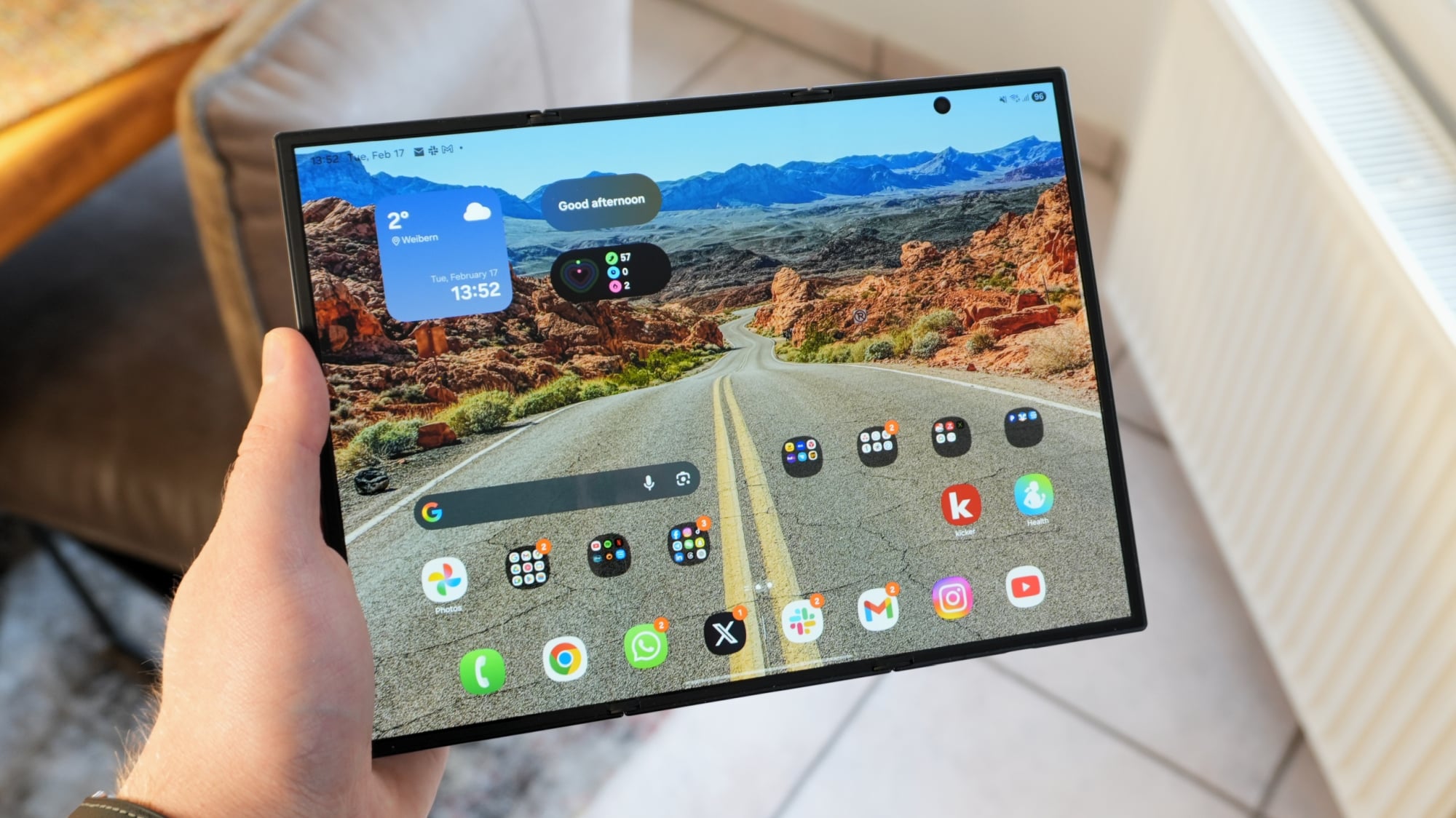
Huawei's New Tri-Fold Just Proved Samsung Called It First
Samsung's Galaxy Z TriFold made waves last year, and it wasn't just another release—it was a statement. Sure, it wasn't technically the first tri-folding phone to hit the market (Huawei beat them to that milestone with the Mate XT), but Samsung took a noticeably different approach with its design and execution, treating the device more as a bold technological showcase than a mass-market contender. Rather than rushing to compete purely on the "first to market" narrative, Samsung seemed more interested in proving what's possible when engineering ambition meets folding phone innovation. The TriFold represents a glimpse into where smartphone design might be heading, blending multiple screens into a single device that folds not once, but twice, creating new possibilities for productivity, media consumption, and multitasking on the go. This move fits into Samsung's broader strategy of continuously pushing boundaries in the foldable space, an area they've been cultivating since their original Galaxy Fold debuted years ago. While competitors like Huawei have made their own headlines with tri-fold innovation, Samsung's version highlights the company's own take on materials, hinge technology, and software optimization tailored for a tri-screen experience. For now, the Galaxy Z TriFold seems less about immediate widespread adoption and more about signaling intent—showing consumers and competitors alike that Samsung is serious about shaping the next generation of mobile devices. It's a reminder that in the fast-moving world of smartphone innovation, sometimes being first isn't as important as being bold, distinctive, and forward-thinking. Keep an eye on this space, because foldables are clearly just getting started.

Talking to AI Too Much Might Be Turning You Into a Robot
It's a question worth sitting with for a moment: is AI quietly reshaping who we are? Not in some dramatic sci-fi sense, but in the small, everyday ways we think, communicate, and make decisions. Every time we let an algorithm suggest what to watch, ask a chatbot to draft an email, or lean on a recommendation engine instead of trusting our own gut, we're handing over a little piece of the decision-making process. Multiply that by millions of people doing it daily, and you start to wonder what kind of ripple effect we're creating. The honest answer is that nobody knows for certain yet. These tools are still relatively new, and the long-term effects on our habits, creativity, and even our relationships are still unfolding in real time. What we do know is that change rarely announces itself loudly. It tends to creep in through convenience, one small shortcut at a time, until suddenly the shortcut has become the default. That's precisely why it matters to ask the question now, rather than waiting to look back and wonder how we got here. Staying curious and a little skeptical about the tools we use every day isn't about resisting progress. It's about staying aware of it. Worth noting: coverage like this is written and fact-checked by actual humans, not generated by the very technology it's examining. So as AI keeps evolving, maybe the real story is how we choose to evolve alongside it.
We want to hear from you, TechSwu fam. 🤖
Are we becoming more "robot-like" the more we chat with AI, or is that just science fiction dressed up as science? Are you Team Apple, counting down to September 9th, or are you more curious about how Tim Cook's exit reshapes the company he spent 15 years building? And that Huawei tri-fold — genius engineering or gimmick?
Hit reply and tell us which story stopped your scroll this week. We read every single response, and your takes might just make it into next issue's headlines.
Know someone who'd love geeking out over foldables, killer robots, and AI career hacks as much as you do? Forward this email their way — good tech gossip is better shared.
And if this newsletter landed in your inbox because a friend forwarded it, don't be a stranger — hit subscribe and join the TechSwu crew. New tech, fresh takes, zero fluff, delivered straight to you.
Until next time, stay curious. 🔋
— The TechSwu Team