- TECHSWU
- Posts
- TechSwu
TechSwu
AI control warnings, desktop-controlling Gemini, risky AI toys, and Apple's new defense against agents in your files.

TECHSWU
November 25, 2026


Meta's AI Chief Just Warned We Could Lose Control of Superintelligence
Today's top story comes from Meta, where chief AI officer Alexandr Wang issued a striking warning over the weekend: humanity could lose control of artificial intelligence as it races toward superintelligence. Speaking in comments reported by The Telegraph, Wang didn't mince words about the stakes, suggesting the implications for humanity are substantial and worth taking seriously. It's a notable statement given who's making it. Wang isn't an outside critic or academic skeptic—he's leading AI strategy at one of the world's most influential tech companies, actively building the systems he's cautioning about. That tension is worth sitting with. When someone steering the development of advanced AI openly acknowledges the risk of losing oversight, it signals this isn't just theoretical hand-wringing from skeptics on the sidelines. Superintelligence, broadly speaking, refers to AI systems that could eventually surpass human cognitive abilities across the board, not just in narrow tasks like image recognition or language processing. The concern Wang raises centers on control: as these systems grow more capable and autonomous, can developers ensure they remain aligned with human intentions and values? This conversation matters beyond Silicon Valley boardrooms. Decisions made now about AI safety, oversight, and governance will shape how these technologies integrate into everyday life, from workplaces to personal devices. For everyday readers, it's a reminder that enthusiasm for AI's capabilities should be paired with honest scrutiny of its risks. We'll be watching how Meta and other major players respond to these internal warnings, and whether policy conversations catch up to the pace of innovation.

Türkiye bets big on homegrown humanoid robots for industry
Today's top story out of Ankara: Turkey's Industry and Technology Ministry has officially opened a call for proposals aimed at developing homegrown humanoid robots for industrial use, with a clear goal of building machines that can outperform the competition already on the market. This isn't just another government funding announcement. Humanoid robots, machines designed with human-like bodies capable of walking, manipulating objects, and navigating spaces built for people, have become one of the most closely watched frontiers in robotics. Companies worldwide are racing to put these robots to work on factory floors, in warehouses, and eventually in everyday environments where flexibility matters more than specialized, single-purpose automation. Turkey's move signals its intent to compete directly in that race rather than simply import the technology from abroad. By inviting proposals specifically for industrial applications, the ministry is prioritizing practical, revenue-generating use cases over flashy consumer demonstrations. Industrial humanoids could potentially handle tasks that traditional robotic arms struggle with: moving through human-designed spaces, adapting to varied tasks, and working alongside people without requiring factories to be rebuilt around them. The real test, of course, lies ahead. Developing humanoid robots that genuinely outperform established players from the United States, China, and elsewhere requires more than funding and ambition, it demands advances in balance control, sensing, battery life, and cost-effective manufacturing. Whether Turkish engineers can close that gap remains an open question. Still, this initiative reflects a broader global pattern: nations increasingly view robotics capability as a matter of industrial competitiveness, not just technological curiosity. Worth watching as proposals roll in.

Today's leak: Galaxy S27 Ultra may cut yet another camera feature
Today's top story takes us into Samsung's camera lab, or more specifically, out of it. The Galaxy S27 Ultra, expected to launch in early 2027, is already generating buzz thanks to a fresh leak about its rear camera setup, and the news might surprise fans who assume more lenses always mean better photography. Tipster Ice Universe, a source with a solid track record on Samsung leaks, claims the upcoming flagship won't just trim down to three rear sensors from the current four, as earlier rumors suggested. It may also drop a specific camera component altogether, further simplifying the module's design. Samsung hasn't confirmed any of this, so we're squarely in educated-speculation territory, but the pattern is worth paying attention to. Why would Samsung streamline a feature that's long been a selling point? The likely answer is practical rather than flashy. Fewer physical sensors can mean better space efficiency, potentially allowing for a larger main sensor or improved low-light performance, areas where raw lens count matters less than sensor quality and computational processing. It also reflects a broader industry shift: smartphone makers increasingly rely on software and AI-driven image processing to compensate for hardware simplification. For everyday users, this could translate into a cleaner camera bump, possibly improved photo consistency, and perhaps even cost savings passed along in production, if not necessarily in price. Of course, until Samsung confirms specifications, we're evaluating a rumor, not a release. We'll keep tracking how this story develops as more details emerge ahead of the Galaxy S27 Ultra's anticipated 2027 debut.


AI toys are hitting shelves fast but are they safe for kids
Today's story hits close to home for any parent who's watched their kid chat with a smart speaker: AI-powered toys are now hitting shelves, and they're raising real questions about what we're putting in children's hands—and in their rooms. These aren't the scripted, button-activated toys of years past. The new generation uses generative AI, the same underlying technology that powers chatbots like ChatGPT, meaning the toy can hold open-ended conversations, respond to unexpected questions, and essentially improvise rather than recite pre-programmed lines. That's the appeal for manufacturers marketing these products as more engaging, more responsive, more "alive" than traditional toys. It's also exactly what's worrying parents and child development experts. Generative AI systems are known to sometimes produce inaccurate, inappropriate, or simply unpredictable responses, even when built with safeguards. Handing that unpredictability to a young child, who may not have the judgment to question what a toy tells them, is a different risk calculus than giving the same technology to an adult. There are also quieter concerns worth noting: what data these toys collect during conversations, how that information is stored or used, and whether companies marketing to kids are being transparent about any of it. None of this means AI toys are inherently harmful, but it does mean they deserve more scrutiny than the average plush animal. As with so much AI-driven innovation, the technology is arriving faster than the guardrails. For parents considering one under the tree this year, the smart move is asking what's actually happening inside that toy before it starts talking back.

Gemini for Mac Can Now Click, Type and Run Your Apps for You
Today's top story out of Google is a quiet but meaningful shift in how we interact with our computers: Gemini can now operate your Mac apps and websites for you. The feature, called Computer Use, lets the AI take control of a background window on your desktop, clicking, typing, and navigating through tasks much like a human would, rather than simply fetching information or generating text. Here's what makes this interesting. Instead of asking Gemini to explain how to do something, you can ask it to actually do it, whether that means filling out a web form, organizing files, or working through a multi-step process inside an application. The background window approach is a practical touch, too, letting the AI work without hijacking your entire screen while you continue with other tasks. This rollout is currently available to subscribers on Google's AI Plus, Pro, and Ultra tiers, signaling that Google sees this as a premium capability rather than a basic assistant trick. It also reflects a broader trend across the AI industry: tools are moving from answering questions to performing actions, with varying degrees of autonomy. The practical implications are worth watching closely. Automation like this could genuinely save time on repetitive digital chores, but it also raises familiar questions about reliability, oversight, and how much control users want to hand over to software navigating their apps independently. As with any new automation feature, the real test will be how well it performs on the messy, unpredictable tasks people actually deal with every day, not just polished demos.

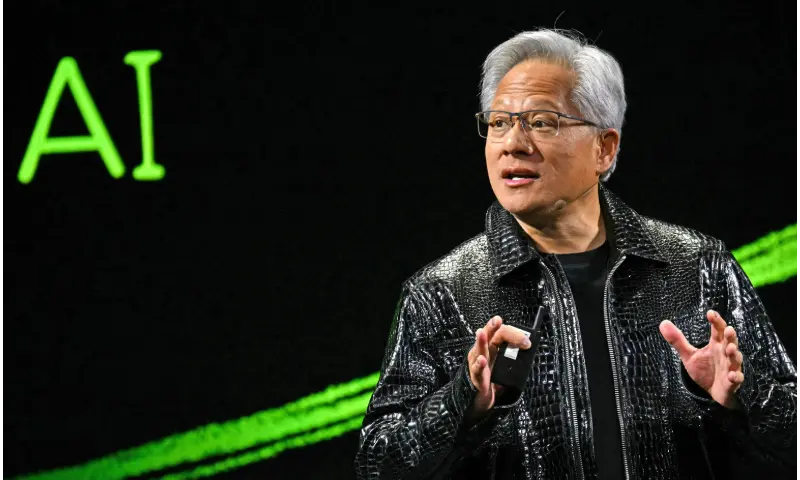
Jensen Huang's return rattles markets, reshapes Taiwan tech's future
Today's headline out of the markets is a reminder of just how closely tied investor confidence is to leadership in the tech world: news that Jensen Huang was back at Nvidia's helm sent the company's shares soaring 31.5 percent, and the ripple effect reached all the way to Taiwan, where the benchmark TAIEX index jumped 9 percent in response. It's a striking illustration of Nvidia's outsized role in the global technology economy right now. As the company behind the graphics processing units powering much of today's artificial intelligence boom, Nvidia isn't just another chipmaker, it's become a bellwether for how investors view the trajectory of AI development itself. When uncertainty around its leadership resolves, markets don't just shrug, they react with real force. The Taiwan connection matters too. The island is home to critical semiconductor manufacturing infrastructure that companies like Nvidia depend on, so swings in Nvidia's fortunes tend to echo through Taiwanese markets almost immediately. That interconnectedness says a lot about how fragile and concentrated the supply chains behind modern computing really are. For everyday readers, this isn't just a Wall Street story. The chips Nvidia designs are quietly embedded in the AI tools, data centers, and smart devices increasingly shaping how we work and live. When confidence in that ecosystem wavers or rebounds, it's worth paying attention, not because of the stock price itself, but because of what it signals about the stability and direction of the technology quietly reshaping daily life. Leadership, it turns out, remains a surprisingly powerful variable in an industry obsessed with automation.

Take-Two just killed a fan-made GTA 6 PC project
Today's story in the gaming-tech world is a reminder that intellectual property enforcement moves just as fast as innovation does. Take-Two Interactive has filed a DMCA takedown against Leonida, an unofficial, fan-driven project that aimed to bring Grand Theft Auto 6 to PC ahead of its official release. Here's the context: Grand Theft Auto 6 hasn't launched yet, and details about platform availability remain tightly controlled by Take-Two and developer Rockstar Games. The Leonida project reportedly sought to recreate or port elements of the unreleased title for PC users, operating outside any licensing agreement with the publisher. That's precisely the kind of unauthorized use that triggers a DMCA takedown notice, a legal mechanism under the Digital Millennium Copyright Act that lets copyright holders demand removal of infringing content from platforms and repositories. Why does this matter beyond gaming circles? It's a useful case study in how aggressively major entertainment companies protect unreleased intellectual property, especially for titles with massive commercial anticipation. Grand Theft Auto 6 is one of the most hyped game releases in recent memory, and Take-Two has strong financial incentive to control how, when, and where the game reaches players. For everyday tech enthusiasts, this also highlights the legal boundaries around fan projects, modding communities, and unofficial ports. Passion projects built on existing franchises can offer genuine innovation and creativity, but they operate in a legal gray zone that publishers can shut down quickly. If you're involved in independent development or fan-made software inspired by commercial products, this takedown is a practical reminder to understand copyright exposure before investing significant time and effort.

Apple's Mac fix for AI agents snooping through your files
Today's top story out of Cupertino concerns something that sounds small but actually matters quite a bit for anyone letting AI agents loose on their Mac. In macOS 27.3 beta 2, Apple has introduced a more granular way to manage what these automated helpers can actually touch on your system. Here's the backstory: as AI agents increasingly take on tasks like organizing files, managing documents, or automating workflows, they've typically needed Full Disk Access to function. That's a broad permission, essentially handing over the keys to your entire Mac, including sensitive folders, personal documents, and system files the agent may never need to see. It works, but it's a blunt instrument for a job that often requires surgical precision. Apple's fix is refreshingly practical. Instead of an all-or-nothing toggle, users can now designate specific protected folders for AI agents to access, leaving everything else off-limits. Want your agent to manage a particular project folder without peeking into your financial documents or personal photos? Now you can set that boundary directly. This matters because it reflects a broader shift happening across the industry: as AI tools become more autonomous and embedded in daily computing, the permission systems governing them need to grow up too. Full Disk Access made sense when AI assistance was limited and occasional. It makes far less sense now that agents are doing real, ongoing work on our machines. For everyday users, the practical takeaway is control without complexity. You get the convenience of AI automation while keeping sensitive data genuinely sensitive, a balance that's been overdue.