- TECHSWU
- Posts
- TechSwu
TechSwu

TECHSWU
March 06, 2026


In a surprising turn of events, Ben Affleck has sold his AI postproduction startup, InterPositive, to Netflix, marking a significant shift from his initial fears about artificial intelligence. Founded in 2022, InterPositive was developed to assist in the post-production process, enhancing footage by tackling issues like shot reframing and lighting adjustments.
Affleck, who previously expressed skepticism about AI's creative potential, has embraced the technology's possibilities, stating that it represents a "meaningful innovation." With this acquisition, Netflix aims to leverage AI tools that complement rather than replace the work of creative professionals.
As part of the deal, Affleck will join Netflix as a senior advisor, symbolizing a new chapter for both the actor and the evolution of AI in the media landscape. The industry is shifting its views on AI, recognizing its potential to enhance, rather than threaten, creativity in filmmaking.
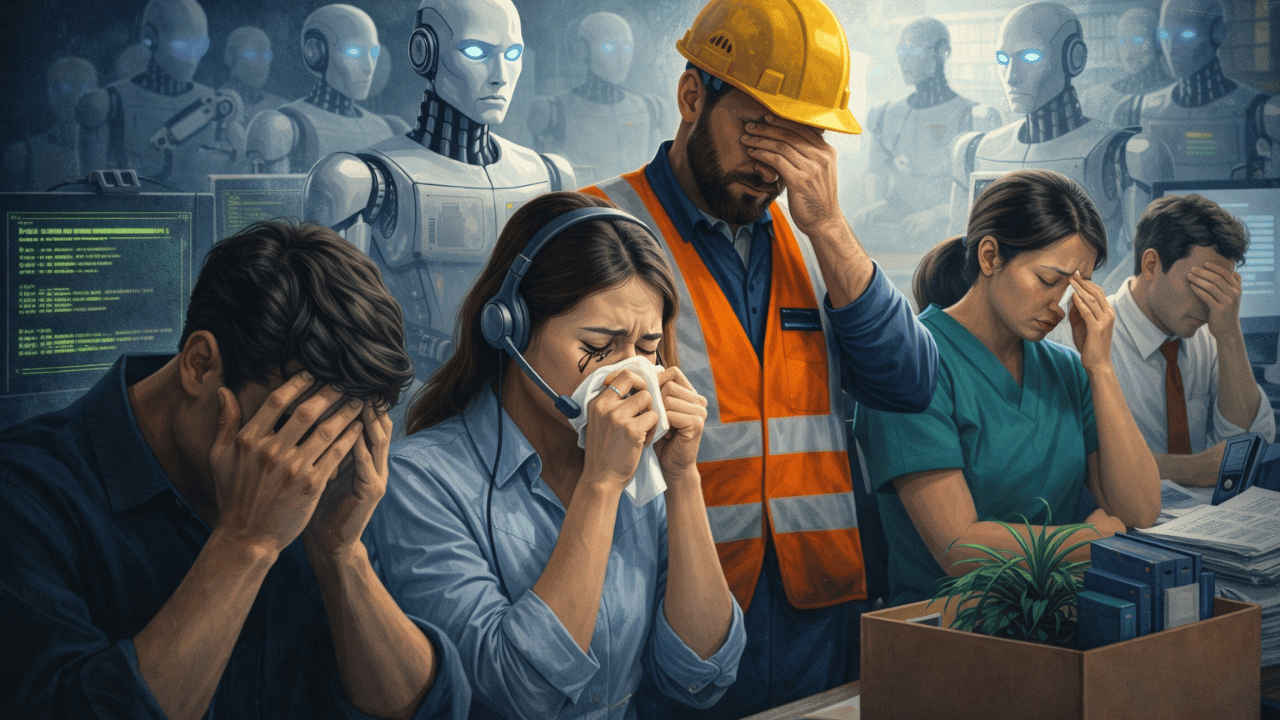
Anthropic has unveiled a revealing study on the jobs most susceptible to the influence of artificial intelligence. Their research indicates that roles in technology and office environments, especially programmers, customer service representatives, and data entry workers, are at significant risk, with AI capable of handling a hefty portion of their tasks.
Conversely, occupations reliant on physical presence, like cooks and lifeguards, enjoy a buffer against automation. While economists find it challenging to predict immediate changes in the job market, their findings indicate subtle shifts in hiring practices, particularly affecting younger workers aged 22 to 25.
Despite rising concerns about AI-driven job loss, there's limited evidence of widespread disruption just yet.


In a bold—and controversial—move to boost workplace productivity, some major tech companies are stocking vending machines with nicotine pouches, aiming to keep employees alert and focused. Firms like Palantir and Hello Patient have installed these machines, touted for their supposedly stimulative effects without the harmful smoke of traditional cigarettes.
However, the approach has sparked backlash from health experts who warn about the potential for addiction and cardiovascular issues linked to nicotine use. Critics argue that this practice could foster unhealthy associations between job performance and drug use, likening it to a “Pavlovian response.
” While some on social media find the strategy impressively devious, others caution that relying on these pouches could create dependency.

In today's tech-savvy world, our personalities play a surprising role in how we perceive artificial intelligence (AI). A recent study highlighted in the Journal of Technology in Behavioral Science reveals that traits like extraversion, conscientiousness, and agreeableness can lead to positive experiences with AI, while neuroticism often results in skepticism or fear.
Surprisingly, the study found that a user's technical competency with AI is just as crucial in shaping their outlook. Those who feel in control of their lives also tend to embrace AI more enthusiastically.
As our reliance on AI grows, understanding these psychological factors is essential for fostering trust and ensuring well-being. Whether you're an optimist or a skeptic, it’s clear: our unique personalities influence our relationship with technology.

Get ready for the Port of the Future Conference in Houston, TX, on March 24–25, 2026, where 50 innovative ports will showcase what's next in marine technology! Amidst exciting news, Hydromea and Equinor have made waves by achieving the world's first high-bandwidth wireless data transfer from the seabed to the cloud. This breakthrough is a game-changer for subsea communication! As exploration ventures into deeper ocean territories, understanding the role of lithium batteries in powering extreme subsea vehicles becomes crucial.
Celebrating milestones, the R/V Endeavor has completed her final voyage, marking a legacy of contributions to ocean research. With advances in earthquake monitoring and AI-driven underwater drones, the marine landscape is evolving faster than ever.

Robotic exoskeletons are stepping into the spotlight, offering a transformative opportunity for consumer robotics as they integrate modern AI and robotics technology. Recent demonstrations in China, including rentals at tourist hotspots like the Great Wall and Mount Tai, showcase these devices' ability to assist wearers during activities like hiking.
With a focus on the aging population, companies are shifting away from heavy industrial models to lighter, more user-friendly designs. Investment is booming, with significant funding in 2025 pointing to a bright future.
However, challenges remain—current models can be uncomfortable and require improvements in AI responsiveness and safety features. As manufacturers strive to enhance user experience and establish industry standards, exoskeletons could redefine everyday mobility and bring consumer robotics into mainstream adoption.

The dream of a seamless smart home has largely fizzled, leaving tech giants scratching their heads over why consumers have shied away from a fully automated lifestyle. Google and Amazon admit that their previous smart home offerings were too complex for average families.
In a bid for redemption, both companies are banking on new A.I.
assistants—Gemini and Alexa+—to simplify the setup process and enhance user engagement. With the promise of natural language commands, users could, for instance, just ask their A.
I. to sync devices to respond to household events, like a smoke alarm triggering red lights.
Both Google and Amazon hope these innovations will transform the way families interact with technology, eliminating the need for a “home I.T.
administrator” and making smart living accessible for everyone. The tech industry’s latest push aims to finally deliver on the smart home dream—this time with a bit of A.
I. magic.