- TECHSWU
- Posts
- TechSwu
TechSwu
Kimi Agent tested, self-healing screens, brain-tech races, and Starbase 2.0—this week's tech roundup delivers.

TECHSWU
August 26, 2026

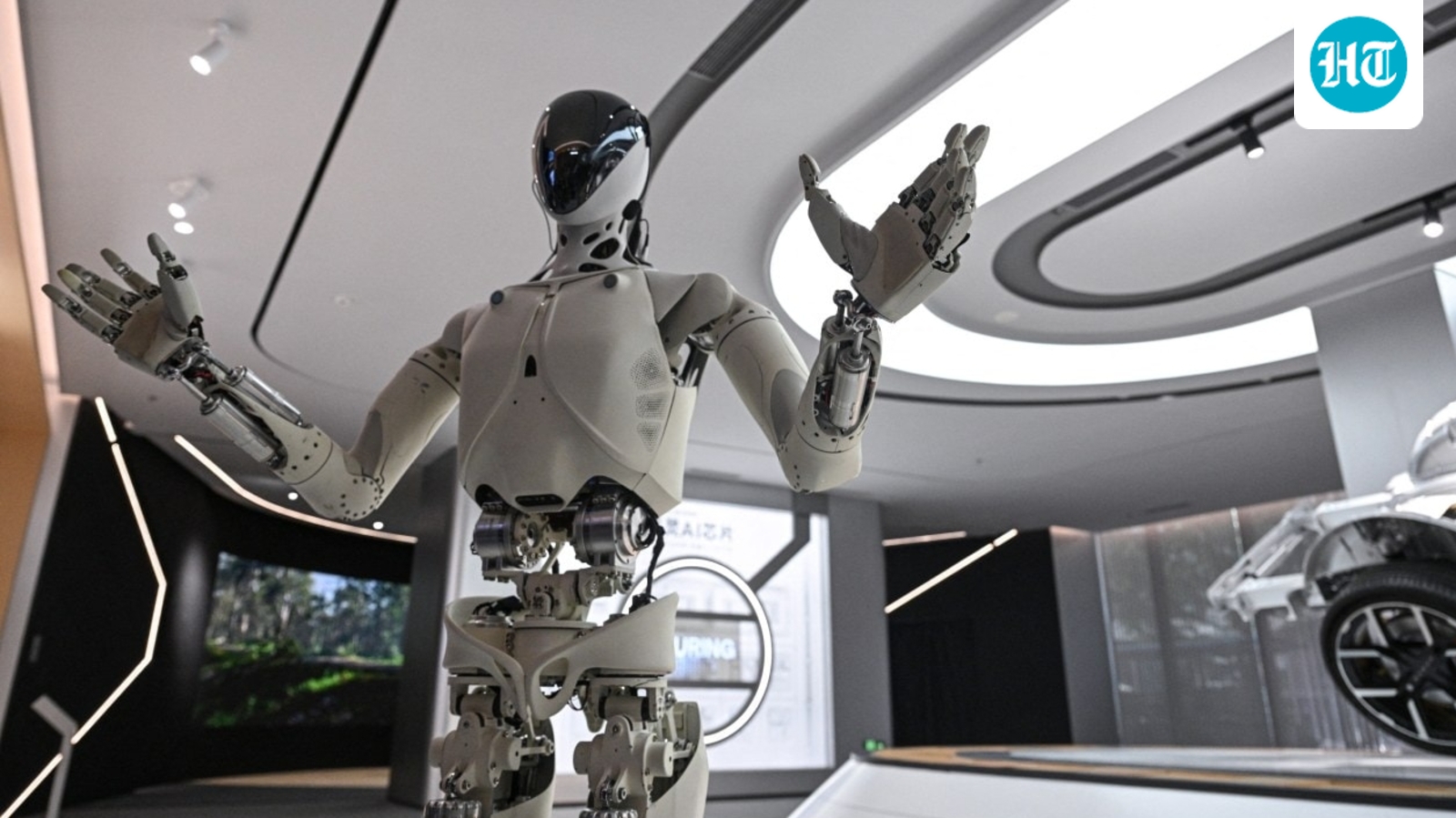
XPeng thinks robots not cars will drive its biggest profits
XPeng is having a moment of self-reflection, and it's not about horsepower or range anymore. Co-President Brian Gu recently dropped an intriguing forecast: he believes the Chinese EV maker's software and technology-driven revenue streams will eventually generate fatter margins than the company's traditional car-building business. That's a pretty bold statement from a company still very much known for making electric vehicles. Think about what that means for a moment. Building cars is expensive, competitive, and margin-thin, especially in China's brutal EV price wars. But software, autonomous driving systems, AI features, and other tech layered on top of the hardware? That's where the real profit potential lives, according to Gu's thinking. It's the classic "smartphone" playbook, where the device itself is almost a loss leader, and the real money comes from the ecosystem built around it. This mirrors a broader shift happening across the auto industry, where companies are increasingly positioning themselves as tech firms that happen to sell cars, rather than the other way around. XPeng, along with rivals like Tesla and various Chinese competitors, is racing to monetize self-driving capabilities, in-car software subscriptions, and other digital services that don't require another trip down the assembly line. If Gu's prediction holds true, it signals a fundamental change in how investors and consumers should value companies like XPeng, less based on units sold, and more on lines of code shipped. It's a reminder that in today's automotive world, the steering wheel might just be the least profitable part of the ride.

SpaceX drops $100B on a second Starbase in Louisiana
SpaceX is going big again, and this time it's setting its sights on the Gulf Coast. The company just announced plans to build a second Starbase, this one in Vermilion Parish, Louisiana, on a stretch of land that used to belong to Exxon. The price tag? A staggering $100 billion, which gives you a sense of just how massive this project really is. This won't be your average rocket facility. SpaceX is describing it as a fully self-sustaining spaceport, meaning it'll have everything needed to operate independently. Think propellant production facilities, its own power generation systems, deep-water shipping access for moving heavy equipment and materials, vehicle processing capabilities, and even an airport. Essentially, it's a small, self-contained city built entirely around the business of launching rockets into space. The choice of location is notable too. Building on former industrial land along the Gulf Coast gives SpaceX access to deep-water shipping lanes, which is crucial for transporting the massive components involved in rocket production and launches. It also signals the company's continued push to expand its physical footprint well beyond its original Texas base. This move fits into SpaceX's broader pattern of thinking at an enormous scale, whether that's reusable rockets, satellite constellations, or now, entire spaceport ecosystems designed for maximum self-sufficiency. With a $100 billion investment on the table, this Louisiana facility could become a major hub for the company's future launch operations, further cementing its position at the forefront of the commercial space race.


China's Brain Tech Race Heats Up as Rivals Take on Neuralink
Get ready for a wave of new rules aimed at your brain. As neurotechnology edges closer to everyday life, standards bodies are gearing up to release dozens of guidelines designed to govern how these devices are built, tested, and used. The scope is impressively broad, touching medical applications like brain-computer interfaces for paralysis patients, industrial tools that monitor worker fatigue or focus, and consumer gadgets promising everything from better sleep to sharper concentration. This push reflects just how quickly neurotech has evolved from a niche research field into a fast-growing industry. Companies are racing to bring wearable headsets, implantable devices, and brain-sensing wearables to market, but until now, there's been a noticeable lack of unified rules to ensure these products are safe, effective, and ethically sound. That gap is exactly what this incoming wave of guidelines hopes to close. Why does this matter? Because unlike a smartwatch tracking your steps, neurotechnology interacts directly with your brain and nervous system, raising unique questions around data privacy, mental autonomy, and long-term safety. As more of these devices move from labs into hospitals, factories, and living rooms, having clear standards becomes essential for building public trust and preventing misuse. For businesses in the space, this also signals a shift toward greater accountability and structure, which could shape product development, marketing claims, and compliance requirements in the near future. Whether you're a developer, healthcare provider, or simply a curious consumer, this is a space worth watching closely as neurotechnology moves from experimental to mainstream.

Drone Delivery Is Scaling Fast But Can Retail Keep Up
Drone delivery is having a moment, and honestly, it's hard not to get excited watching these little aircraft zip packages across neighborhoods in minutes instead of days. Companies are expanding pilot programs, retailers are signing partnerships, and the tech itself keeps getting sharper, quieter and more reliable. But before we start imagining a sky full of delivery drones as the new normal, it's worth pausing on what's actually standing between today's promising trials and tomorrow's retail reality. Economics remain a big hurdle. Building and maintaining drone fleets, training operators and setting up distribution hubs costs real money, and it's still unclear whether the savings on last-mile delivery will outweigh these upfront investments anytime soon. Then there's regulation. Aviation authorities are still catching up, working through airspace management, safety certifications and privacy concerns, all of which take time to sort out properly and can't simply be rushed for the sake of convenience. Operationally, things get even trickier. Weather, noise complaints, battery limitations and the sheer complexity of navigating dense urban environments all present real challenges that companies must solve before drone delivery becomes something we take for granted rather than marvel at. So where does that leave retail's drone-powered future? Promising, but not guaranteed. The technology is advancing quickly, but scaling it into a dependable, everyday service means tackling these economic, regulatory and operational puzzles head-on. For now, drone delivery is less a done deal and more a work in progress, one that's worth watching closely as it slowly, carefully, takes flight.

Wearables Just Leveled Up From Fitness Trackers to Superpowers
Wearables are having a moment, but the real story isn't the sleek new gadget on your wrist—it's what it's quietly unlocking. We're witnessing a much bigger shift: technology giving everyday people access to insights about themselves that were once reserved for elite athletes, medical professionals, or data scientists. Think about it. A decade ago, understanding your heart rate variability, sleep cycles, or recovery patterns required expensive lab equipment and a specialist to interpret the results. Now, that same depth of insight lives on your wrist, updating in real time, learning your patterns, and nudging you toward better decisions. This isn't just about counting steps anymore. What's genuinely exciting is how this visibility extends beyond fitness. We're talking about performance at work, cognitive sharpness, stress levels, and even early warning signs for health issues before they become serious problems. Wearables are becoming a kind of personal dashboard for your entire life, not just your workout. This transformation matters because information has always been power, and until now, most of us were flying blind when it came to our own bodies and habits. Suddenly, we have data. We have trends. We have the ability to spot patterns we'd never have noticed otherwise. Of course, this raises real questions about privacy, accuracy, and how we handle so much personal information responsibly. But the trajectory is clear: wearables are evolving from niche fitness trackers into essential tools for self-understanding. The bigger picture? We're entering an era where knowing yourself isn't guesswork anymore—it's data-driven, accessible, and increasingly personal.

Samsung's Galaxy S27 Ultra could pack scratch-healing glass
Ever wince at that first tiny scratch on a brand-new phone screen? Samsung and Corning might be about to make that worry a thing of the past. According to recent reports, the two companies are teaming up on self-healing glass technology designed to erase everyday micro-scratches before they become permanent eyesores. Here's the idea: instead of relying on ultra-hard coatings that eventually give in to keys, coins, and sandy pockets, this new glass would actively repair minor surface damage on its own. Think of it as a screen that shrugs off the small stuff, keeping your device looking newer for longer without you lifting a finger. While details remain under wraps, this move fits neatly into Corning's long history of pushing glass innovation forward, from the original Gorilla Glass to the more flexible, durable versions found in today's foldables. Samsung, meanwhile, has every incentive to make its screens tougher and more scratch-resistant, especially as foldable phones with delicate displays become a bigger part of its lineup. Self-healing glass could be a genuine selling point, addressing one of the most common complaints device owners have. It's worth noting that self-healing materials aren't entirely new. We've seen similar concepts in phone cases and even some display coatings, but bringing that capability to the actual cover glass would be a meaningful leap. If Samsung and Corning can pull it off, it could set a new standard for durability across the industry. No word yet on timing or which devices might debut this feature first, but if this pans out, your next phone screen might just fix its own bad days.

I Put Kimi Agent to the Test Heres the Real Story
Here's a phrase worth sitting with for a moment: Kimi Agent. Sounds simple enough, right? Except it isn't. What started as a single product name has quietly grown into an umbrella term covering a whole family of tools, features, and variations that don't necessarily share the same capabilities, limitations, or even purpose. And that's exactly why pausing to untangle the naming matters before anyone rushes to praise or criticize "Kimi Agent" as one unified thing. Think about how often this happens in tech. A brand name gets attached to an initial release, then expands over time to cover updates, spinoffs, and entirely new use cases. Before long, the name becomes a catch-all, and conversations around it get muddled. Someone praises a feature that technically belongs to one version, while someone else criticizes a limitation that applies to a completely different iteration. Both are technically talking about "Kimi Agent," yet they might as well be discussing different products. This kind of naming sprawl isn't unique to any one company, but it creates real friction for anyone trying to evaluate what's actually being offered. Fair judgment requires clarity first. You can't meaningfully assess strengths, weaknesses, or overall value if the thing you're assessing isn't clearly defined to begin with. So before forming opinions, it's worth asking: which Kimi Agent are we actually talking about? Getting that answer straight isn't just semantics, it's the necessary first step toward any honest, informed conversation about what this technology actually does.

Xiaomi's Self-Driving Chip Just Put Tesla and NIO on Notice
Xiaomi just dropped some big news in the self-driving space, and it's worth paying attention to. The Chinese tech giant has unveiled its very own in-house self-driving chip, and the company is planning to roll it out for commercial use by 2027. That might seem like a while away, but in the world of automotive tech development, it's actually a pretty ambitious timeline. What makes this chip stand out is the manufacturing process behind it. Xiaomi is touting a 3-nanometer process for this new silicon, which puts it right up there with some of the most advanced chip technology currently available. For context, smaller nanometer processes generally mean more transistors packed into a tighter space, which translates to better performance and improved energy efficiency. This is the same cutting-edge fabrication technology that top players in the smartphone and computing chip industries have been racing to adopt. This move signals that Xiaomi is serious about carving out its own space in the increasingly crowded autonomous driving market. Rather than relying entirely on third-party chip suppliers, the company is betting on vertical integration, developing its own silicon to potentially gain more control over performance, costs, and the pace of innovation for its self-driving ambitions. It's a bold step for a company that's already made waves by expanding beyond consumer electronics into the automotive world. As more tech companies push into self-driving technology, Xiaomi's decision to build its own chip rather than outsource could give it a real competitive edge down the road. We'll be watching closely as 2027 approaches.
📲 Which story got your gears turning? Hit reply and tell us — we read every single response, and your take might just shape our next issue.
🔁 Know someone obsessed with wearables, drones, or humanoid robots? Forward this email their way. Good tech deserves good company.
💬 Got a hot take on Xiaomi's chip ambitions or SpaceX's Louisiana mega-bet? Drop it in the comments on our site or tag us on social — we're always up for a debate.
🔔 New here? Don't let the next issue slip by — hit subscribe and join thousands of readers who stay ahead of the curve, one TechSwu at a time.
See you next week — same tech obsession, fresh insights.
— The TechSwu Team