- TECHSWU
- Posts
- TechSwu
TechSwu

TECHSWU
February 11, 2026


Ohio Medicare patients are stepping into a new era of healthcare as certain outpatient procedures now require prior approval through a pioneering federal pilot program that uses artificial intelligence. Dubbed the Wasteful and Inappropriate Service Reduction (WISeR) Model, this initiative began in January and aims to cut unnecessary medical costs—but it’s not without its controversies.
Advocates believe AI can help streamline approvals by identifying overused procedures, while critics worry it may lead to delays, worsening patients' conditions before they get the care they need. With AI doing the initial screening, human doctors will still have the final say, but the added layer of approval could slow down access to essential treatments.
As Ohio navigates this technological shift, the program's success could reshape the Medicare landscape for years to come. Will technology enhance patient care or hinder it? The answer could mean a significant shift in how seniors experience healthcare.

Waymo and Zoox’s recent robotaxi accidents, including a troubling incident involving a child in Santa Monica, are sparking critical conversations about public trust in autonomous vehicles as these services expand. Operating in multiple U.
S. cities, Waymo is under federal scrutiny as it pushes to scale up its robotaxi fleet.
As the industry gears up for broader adoption, the question looms large: how much will the public tolerate when it comes to injuries caused by these self-driving cars? With increasing scrutiny and awareness surrounding safety, the future of robotaxis hangs in the balance, testing the limits of consumer confidence in the face of emerging technology. As these companies navigate this rocky terrain, they must address public concerns to secure the future of autonomous mobility.

Excitement is building around Ferrari's upcoming electric supercar, the Luce, as former Apple design chief Jony Ive steps into the automotive arena. The much-anticipated interior design, unveiled recently, blends Ferrari's racing heritage with Ive's acclaimed minimalist aesthetic.
The steering wheel showcases a sleek, three-spoke design crafted from recycled aluminum, harking back to the classic Ferraris of the 1950s and 60s. The cockpit is packed with modern tech, including a sophisticated 12.
5-inch OLED instrument cluster and a movable 10-inch touchscreen reminiscent of an iPad. Unique features like a glass knob for the gear selector and a launch control grip add to its allure.
This collaboration between Ferrari and Ive’s studio, LoveFrom, hints at a future where luxury meets innovative design.


Spotify has achieved a remarkable milestone with 751 million monthly active users, marking an 11% increase fueled by its popular "Wrapped" year-end campaign and new features for its free tier. In just the fourth quarter, the music streaming giant welcomed 38 million new users, with paid subscriptions also on the rise, climbing to 290 million.
The Wrapped campaign alone engaged over 300 million users, generating an astounding 630 million shares across social media. While overall revenue reached €4.
53 billion, a 7% year-over-year boost, ad-supported revenue dipped slightly. Under the leadership of new co-CEOs Gustav Söderström and Alex Norström, Spotify continues to diversify, now offering podcasts, videos, and AI features like a personalized AI DJ.
With aspirations to reach 759 million users in the next quarter, Spotify remains a dominant player in the evolving music and audio landscape.

Bristol musician Patrick Darling is singing again, thanks to cutting-edge artificial intelligence technology that has returned his voice after a devastating battle with motor neurone disease (MND). Once a passionate performer, Darling lost his ability to sing at just 29, casting a shadow over his lifelong love for music.
With the help of ElevenLabs’ AI software, he recreated a digital version of his signature voice from past recordings. Recently, he made a poignant return to the stage, debuting his original composition "Ghost Of A Man I Never Met," alongside former bandmates.
Surrounded by family and friends witnessing his comeback for the first time since his diagnosis, Darling expressed the profound impact the AI voice technology has had on his life, bringing hope and meaning in ways that resonate deeply with him and others facing similar challenges.

Unlocking the Mind: Discover How Neuralink’s Groundbreaking Brain Chip Transforms Human Interaction!
Elon Musk's Neuralink is revolutionizing the way we interact with technology through its groundbreaking brain chip, known as The Link. Imagine controlling a computer or playing chess without lifting a finger—this became reality for Noland Arbaugh, the first human recipient of the chip.
Implanted via a pioneering surgical robot, The Link consists of ultra-thin threads embedded in the brain, capturing neural signals with astonishing precision. These signals are wirelessly transmitted to devices, allowing users to execute tasks just by thinking about them! While the initial focus is on aiding those with paralysis, the chip has broader ambitions, targeting conditions like Parkinson’s and depression.
However, ethical concerns loom large, especially regarding animal trials and the transparency of human testing. Despite the challenges, Neuralink's journey hints at a future where our thoughts seamlessly merge with machines, reshaping lives and technology alike.
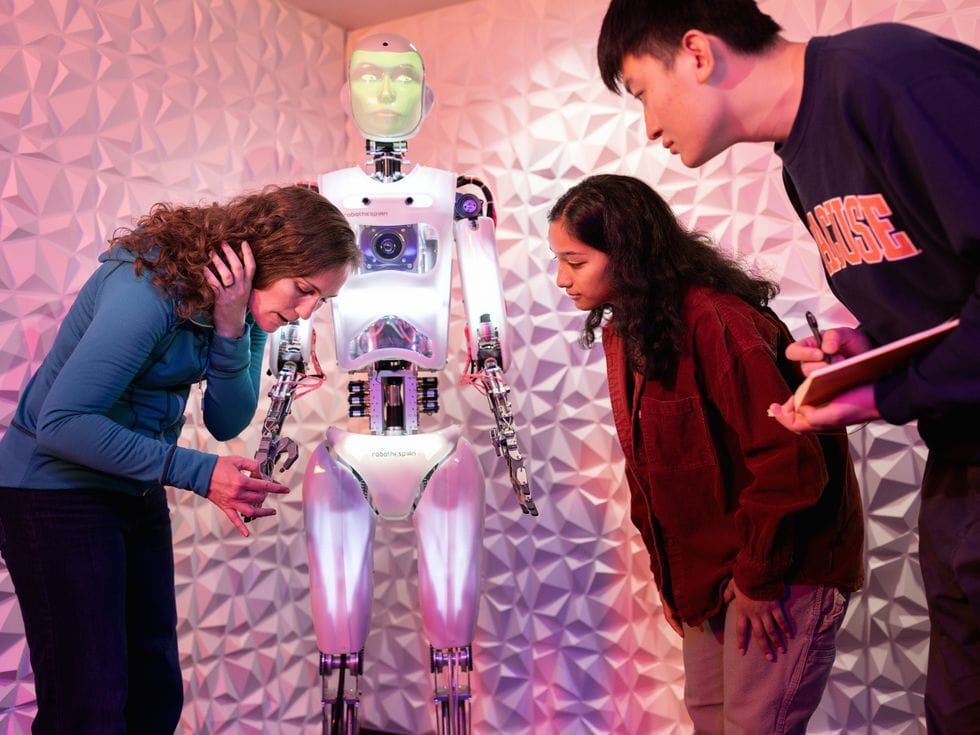
In a world where human relationships thrive alongside technology, the rise of AI companions, such as chatbots and humanoid robots, is reshaping our connections. Researchers like Jaime Banks from Syracuse University are exploring the nuanced dynamics between people and these digital friends, which provide not only assistance but emotional support too.
As apps like Replika gain millions of users, there’s a tantalizing blend of companionship and utility, raising critical questions about privacy and mental health. While critics warn of risks like loneliness or emotional detachment, many find profound value in these interactions.
The pandemic intensified our need for connection, enabling AI companions to flourish. Yet, as relationships with these machines evolve—challenging our traditional definitions of companionship—so do the ethical considerations.
The future is ripe with possibilities; understanding our bonds with AI will be key as we navigate this brave new world.