- TECHSWU
- Posts
- TechSwu
TechSwu

TECHSWU
December 30, 2025

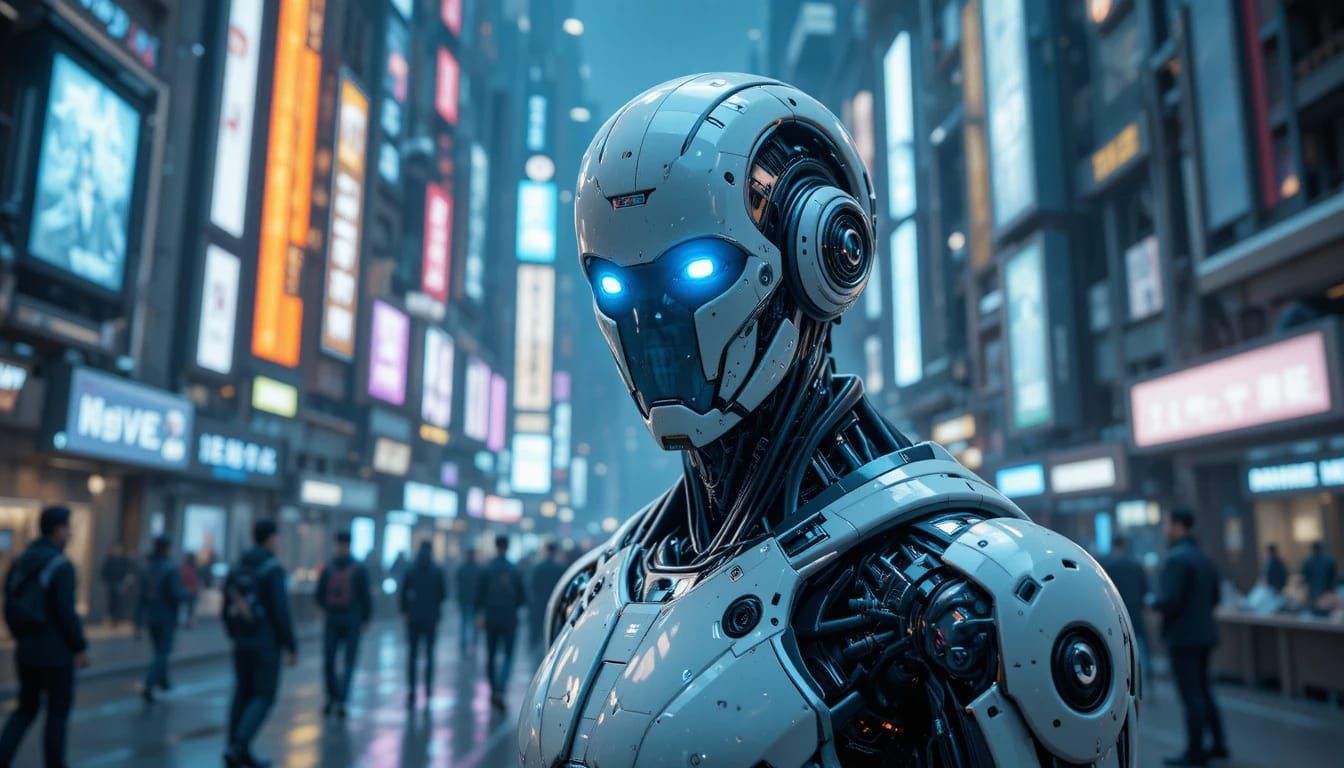
Get ready for a robotic revolution! By 2026, advanced robots are set to transform our daily lives in homes, schools, hospitals, and workplaces. These futuristic helpers, powered by cutting-edge artificial intelligence, will not only take on chores like cooking and cleaning but will also assist in healthcare by helping doctors, monitoring patients, and even providing companionship to the elderly.
In the classroom, they will support teachers and offer personalized learning experiences for students. And don't forget about the exciting rise of delivery and service robots that will zip around cities, ensuring our orders reach us faster than ever! While this technological leap promises efficiency and convenience, it also raises essential questions about job security and ethics.
The key is to embrace these changes wisely, fostering human-robot collaboration to create a safer and better world for all.


Exciting news for Samsung TV owners! In early 2026, Samsung will integrate Google Photos into its television line-up, transforming them into vibrant digital canvases for your favorite memories. This groundbreaking partnership brings exclusive features like the “Memories” slideshow, which curates slideshows based on special moments, and AI-powered tools from Google’s DeepMind to remix your photos.
Say goodbye to just watching shows—your TV will soon showcase birthdays, vacations, and everyday joys with personalized displays. This is a first for non-Google platforms, meaning Samsung users will be the pioneers of this innovative experience before it broadens to others.
With automatic syncing via Google accounts, your cherished photos will be effortlessly accessible, making your Samsung TV not just a screen for entertainment, but a dynamic album for life’s highlights.

In a recent Vox article, Eric Levitz delves into the nuanced perspectives Americans hold regarding artificial intelligence (AI) and its societal implications. While a narrative of widespread anti-AI sentiment persists, the reality is more complex.
Polls reveal that while many voters express concerns about job displacement and rising energy costs linked to AI and data centers, there's also a significant portion showing optimism about technology’s potential benefits. For instance, nearly half of Americans view AI favorably, and a majority believe in advancing the U.
S.'s AI capabilities.
This ambivalence suggests that political parties may struggle to capitalize on a straightforward "anti-AI" stance. As public unease about data center impacts grows, the political landscape may shift, but currently, AI isn't a top concern for most voters.
Levitz’s analysis presents a compelling portrait of a nation grappling with the potential—and pitfalls—of AI integration into daily life.
Meet Li Xia, a beacon of inspiration who, despite being paralyzed and only able to move one finger and one toe, has launched a thriving smart farm start-up! Relying on a ventilator, Li defied daunting odds by leveraging his self-taught tech skills to create a profitable business that showcases the power of innovation and resilience. His journey is a testament to the idea that limitations can spark boundless creativity and determination.
Through his venture, he not only cultivates crops but also nurtures hope and motivation for others facing similar challenges.

Get ready for the future of tech in 2026! As we leap into a new era, gadgets will evolve into smart, AI-powered partners that redefine everyday life. Say goodbye to simple wearables; they’re transforming into medical-grade devices, capable of monitoring everything from blood sugar to stress levels.
Meanwhile, cutting-edge edge-based AI will drive real-time responsiveness and personal data security right at your fingertips. Extended Reality (XR) is set to revolutionize various industries, enhancing tasks with augmented functionalities through lightweight smart glasses and headsets.
Smart homes will become inter-operable wonders, anticipating user needs with seamless compatibility across devices. Forget about waiting for commands; your home will proactively cater to your comfort and safety.
In a tech landscape buzzing with innovation, the gadgets that prioritize genuine utility and user experience will truly shine.

First Lady Melania Trump recently convened an influential gathering of tech giants at the White House to discuss the future of artificial intelligence (AI) education. Notable attendees included Google CEO Sundar Pichai and IBM’s Arvind Krishna, alongside OpenAI's Sam Altman.
Emphasizing the transformative potential of AI, Melania predicted it could become the U.S.
's greatest engine of progress, yet stressed the need for responsible management. She likened nurturing AI to raising children—encouraging innovation while maintaining oversight.
This roundtable followed her announcement of a national AI challenge for students, prompting them to unleash their creativity. Melania’s proactive stance aligns with her previous advocacy for the Take It Down Act, aimed at combatting nonconsensual intimate imagery, including AI-generated deepfakes.
President Trump will further engage tech leaders later in the Rose Garden, signaling a concerted effort by the administration to embrace technology responsibly and innovatively.

O2xpress is stepping up the game in respiratory care with its exciting launch of a comprehensive range of premium sleep apnea machines and advanced CPAP technology. In response to the rising health concerns surrounding Obstructive Sleep Apnea, O2xpress is making high-quality therapy accessible to consumers through partnerships with industry giants like ResMed and Philips Respironics.
Their new lineup features cutting-edge devices, including the sleek ResMed AirSense 11 AutoSet, designed to enhance patient comfort and compliance while providing seamless data tracking. As part of their commitment to holistic care, O2xpress is also expanding its selection of CPAP masks and essential accessories.
Beyond just offering products, they strive to educate users on sleep health and therapy options. With competitive pricing and streamlined shipping, O2xpress ensures that patients can reclaim restful nights easily and affordably.

In a groundbreaking move amid US-China tech tensions, Meta has acquired Manus, a cutting-edge AI startup founded in China and recently relocated to Singapore. This acquisition signals a significant leap towards integrating Manus’s innovative self-directing AI agent into Meta's product ecosystem.
Positioned as a "virtual colleague," Manus’s technology is designed to autonomously plan and execute complex tasks, promising to enhance both individual and business experiences for billions globally. Manus's founder, Xiao Hong, celebrated the deal as a triumph against skepticism surrounding autonomous AI, emphasizing their commitment to pushing boundaries and building at an unprecedented scale.
With rapid success, the company has already reported annual recurring revenue surpassing $100 million, captivating the tech world similar to the hype surrounding other groundbreaking AI products. Meta is excited to harness Manus’s advancements to elevate its AI capabilities, paving the way for the next era of intelligent technology.

In the thought-provoking article titled "What is a Messiah: Is Artificial Intelligence the New Messiah to Save the World," the author explores the concept of a Messiah through history, drawing parallels between ancient figures and modern entities like artificial intelligence. While traditionally defined as a transformative figure, the article questions whether these Messiahs genuinely impact our world or merely offer fleeting hope.
Intriguingly, it posits that music might serve as a redeemer, positively influencing human well-being, based on scientific findings. However, the piece raises alarms about the environmental implications of AI, particularly concerning the massive water usage of data centers.
Ultimately, it leaves readers contemplating whether the benefits of AI outweigh its risks, asking us to consider what kind of "Messiah" we truly need in today's complex civilization.

Roblox is revolutionizing user safety by harnessing the power of artificial intelligence to filter billions of interactions daily in real time. With an impressive user base of nearly 150 million, the gaming platform faces the immense challenge of moderating content generated by players, especially youth.
To tackle this, Roblox employs sophisticated AI models that scan and block harmful messages and interactions instantly, preventing issues like harassment or sharing of personal information before they reach users. Remarkably, users generate around 6 billion text messages and 1.
1 million voice communication hours daily. The AI moderation system has not only enhanced user safety but also supports Roblox’s growth, allowing the introduction of new features and broader multiplayer experiences without increasing risks.
Through a blend of automated systems and human oversight, Roblox is setting the standard for safe online experiences in massively interactive environments.